


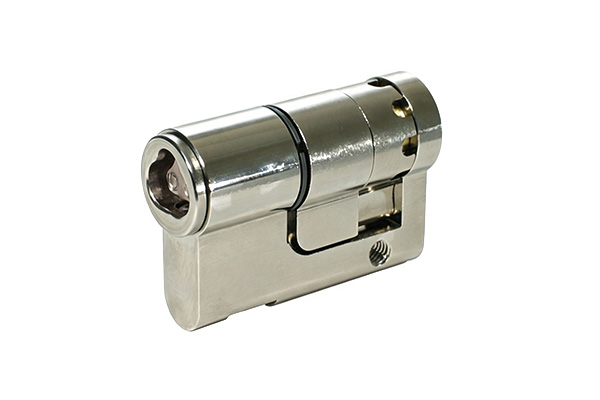
Part Size: 1-150 mm
Weight: 0.1-300 g
Tolerance: ±0.3%
Surface Finish: Ra 0.8–1.6 um
Materials: SS316L, 17-4PH, SS420, Ti Alloy etc
Density: ≥96–99% Wrought
Secondary Operations: CNC, Polishing, Laser Marking

Industry Expertise

Factory Price

OEM/ODM Services
MIM Key System Components are precision parts used in mechanical key systems and advanced security locking mechanisms.
Typical applications include key blanks, key Inserts, key cams, locking elements, cylinder mechanisms.
Metal Injection Molding combines the design flexibility of plastic injection molding with the mechanical properties of metal materials, making it an ideal manufacturing solution for smart lock applications. MIM technology enables the production of intricate geometries, thin-wall structures, internal features, and near-net-shape components while maintaining excellent dimensional consistency and superior surface finish.
Compared with traditional manufacturing methods, MIM significantly reduces secondary machining operations, lowers production costs, and improves assembly consistency, making it highly suitable for medium- and high-volume OEM production."
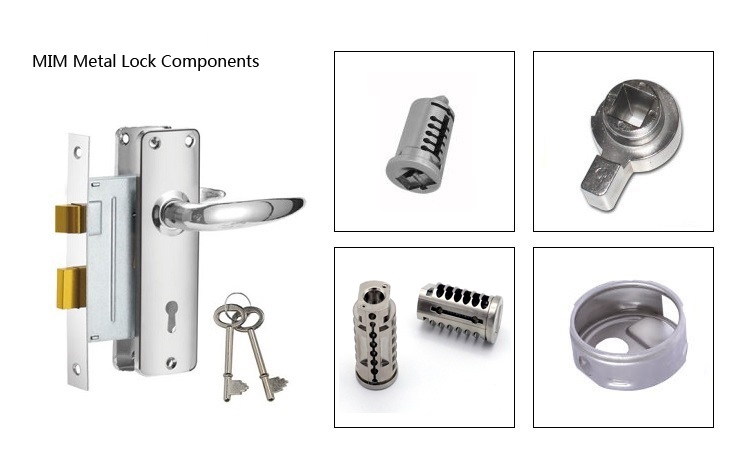
Key system components are developed according to customer drawings, CAD files, material requirements, tolerance requirements, surface finish needs and production volume. Customization must be reviewed together with MIM manufacturability, tooling feasibility, shrinkage behavior and inspection strategy.
| Custom Item | What Can Be Customized | Engineering Review Requirement |
| Geometry | Holes, slots, bosses, hooks, ribs, pivots, compact structural features and mating surfaces. | Review moldability, wall transition, gate location, ejection and sintering stability. |
| Material | Stainless steel, 17-4 PH, 316L, low alloy steel or project-specific material direction. | Confirm material availability, feedstock support, heat treatment and acceptance criteria. |
| Tolerance | As-sintered tolerance or secondary-machined critical features. | Separate functional dimensions from non-critical geometry before tooling. |
| Surface finish | Deburring, polishing, passivation, coating, plating or functional surface finishing. | Review visual requirement, friction surface, coating adhesion and inspection method. |
| Assembly interface | Mating shafts, plastic housing, die-cast frame, screws, connector support or cable routing. | Review stack-up, contact surfaces, wear condition and assembly force. |
| Production stage | Prototype review, tooling development, trial samples and mass production support. | Confirm whether MIM is suitable now or whether CNC validation should come first. |
Key Advantages:
● High Surface Quality
Suitable for visible decorative components.
● Excellent Corrosion Resistance
Ideal for long-term exposure to water environments.
● Precision Manufacturing
Ensures smooth assembly and reliable performance.
● Cost Reduction
Reduces secondary machining and material waste.
FAQ:
Why choose MIM for key system components?
MIM offers excellent precision and repeatability for complex locking structures.
When should I choose MIM instead of CNC machining or stamping?
Choose MIM when the part is small, metal, geometrically complex and needed in repeat production volume. CNC may be better for low-volume prototypes or highly localized precision features. Stamping may be better for flat sheet-metal parts. MIM becomes more attractive when the part has 3D features, holes, hooks, bosses, pivots and compact functional geometry that would be costly to machine or stamp."
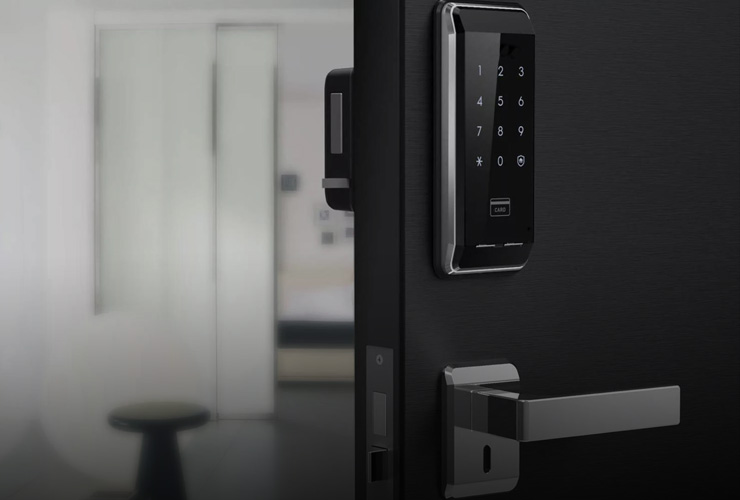
Metal Injection Molding (MIM) technology is widely used in modern security and smart lock systems where precis...
View More
Industrial machinery and automation systems require durable mechanical components capable of operating under c...
View More
Household appliances rely on reliable and cost-efficient components to ensure smooth operation and long servic...
View MoreBack to Top
