Company News
By: Jetvision
Sep 10,2026
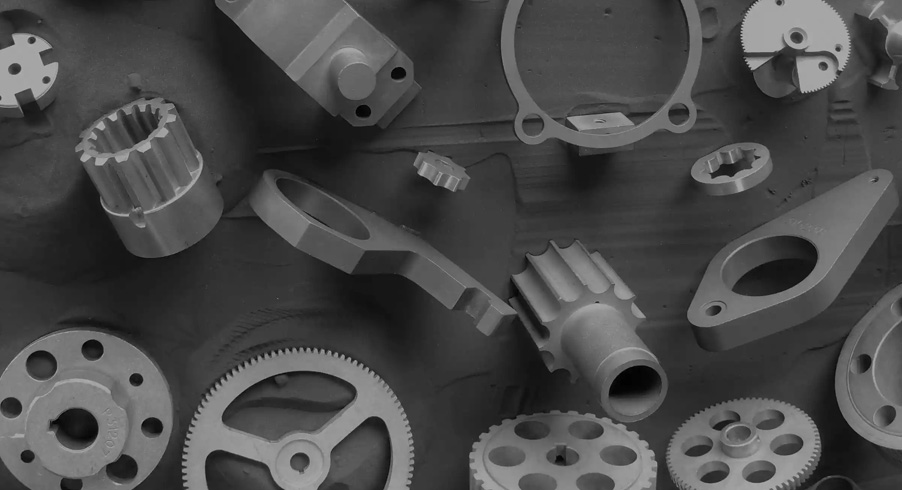
Metal Injection Molding (MIM) is a manufacturing process designed for producing small, complex metal components with high dimensional consistency and repeatable quality. By combining fine metal powders with injection molding technology, MIM can form intricate geometries that may be difficult or costly to produce through conventional machining.
For manufacturers looking for complex metal parts, precision components, and high volume production, MIM offers an effective balance between design flexibility, production efficiency, and material performance.
Why Is MIM Suitable for Complex Metal Parts?
The key advantage of metal injection molding is its ability to produce complex shapes directly from a precision mold. Instead of machining a component from a solid piece of metal, MIM forms the basic geometry during injection molding and then achieves the required material properties through debinding and sintering.
This approach makes MIM particularly suitable for small components featuring:
· Complex and three dimensional geometries · Small holes, grooves, ribs, and bosses · Thin or detailed sections
· Curved or irregular profiles · Multiple integrated features · Tight dimensional requirements
For suitable designs, several features can be produced as part of one component, reducing the need for extensive machining or assembly.
1. Complex Geometry with High Production Efficiency
CNC machining provides excellent flexibility, but complex small parts may require multiple machining operations, special fixtures, and additional tooling. As the geometry becomes more complicated, manufacturing time and production costs can increase.
MIM uses a mold cavity to form the component geometry repeatedly. Once the tooling has been properly developed and qualified, the same complex shape can be produced efficiently in large quantities.
This makes MIM parts particularly attractive for applications where both geometric complexity and production volume are important.
2. Consistent Dimensions for Precision Components
Dimensional consistency is critical for many small metal components used in mechanical, electronic, automotive, medical, and industrial applications.
MIM production involves controlled feedstock preparation, injection molding, debinding, and sintering. Because the molded component undergoes controlled shrinkage during sintering, mold design and shrinkage compensation are important parts of the manufacturing process.
With appropriate process control and inspection, MIM can provide stable dimensional consistency across large production batches.
The actual achievable tolerance depends on the material, component geometry, dimensions, tooling, and production conditions. Critical dimensions can also be finished through secondary operations when required.
3. Reduced Machining for Small Metal Components
One of the main benefits of MIM is its near net shape capability.
Many features that would otherwise require machining can be incorporated into the molded geometry. This can reduce material removal and minimize the number of secondary machining operations.
Depending on the application, MIM components may still require processes such as:
· CNC machining · Grinding · Drilling · Threading · Polishing · Surface treatment
However, reducing secondary operations can improve manufacturing efficiency, particularly when producing large quantities of small and complex components.
4. Suitable for High Volume Production
MIM requires precision tooling, so it is generally more suitable for medium to high volume production than for very small production runs.
Once the tooling is qualified, it can be used repeatedly to produce large quantities of components with consistent geometry. The tooling cost can therefore be distributed across a larger production volume, helping reduce the unit manufacturing cost.
For this reason, MIM is commonly considered when customers need thousands or more precision metal components with the same complex design.
5. Flexible Material Selection
MIM can process a range of metal materials according to the required mechanical and functional properties.
Stainless steel is widely used for MIM components because of its combination of strength, corrosion resistance, and surface quality. Other alloy systems can be selected when applications require specific properties such as higher hardness, wear resistance, or other performance characteristics.
Material selection should be based on the actual application, considering factors such as:
· Strength and hardness · Wear resistance · Corrosion resistance · Operating environment · Surface requirements · Required dimensional stability
Selecting the appropriate material at the beginning of the project helps ensure that the finished MIM components meet their intended performance requirements.
6. MIM Can Integrate Multiple Features
Another advantage of MIM is the possibility of combining multiple functional features into one component.
A complex metal component may include mounting structures, holes, grooves, ribs, or other details within a single molded part. In suitable applications, this can reduce the number of individual components and simplify downstream assembly.
However, complex geometry does not automatically mean a part is suitable for MIM. Designers need to consider wall thickness, powder flow, draft angles, parting lines, shrinkage, sintering behavior, and tooling requirements during the design stage.
Early design evaluation can significantly improve manufacturability and help control tooling and production costs.
MIM vs CNC Machining for Complex Metal Parts
MIM and CNC machining can both produce precision metal components, but they have different advantages.
Factor | MIM | CNC Machining |
Complex small geometries | Excellent for suitable designs | Excellent |
High-volume production | Highly suitable | Can become costly |
Material utilization | Generally efficient | More material removed |
Initial tooling | Higher | Lower |
Unit cost at high volume | Potentially lower | Often higher |
Secondary machining | Often limited | May be significant |
MIM is generally more attractive when the component is small, complex, and required in relatively high quantities. CNC machining may be more suitable for prototypes, low-volume production, larger components, or designs requiring extensive flexibility.
Applications of MIM Components
The combination of complex geometry, repeatable production, and metal material performance makes MIM suitable for a wide range of industries.
Typical applications include:
· Smart locks and security hardware · Electronic components · Industrial equipment · Automotive components
· Mechanical components · Power tools · Medical devices and instruments · Precision hardware
The appropriate manufacturing process should always be selected according to the component's geometry, material, tolerance, production volume, and final application.
When Should You Choose Metal Injection Molding?
MIM is worth considering when a project involves a combination of:
Small part size + complex geometry + precision requirements + medium-to-high production volume
It becomes especially attractive when conventional machining would require multiple operations or when several small components could potentially be integrated into one precision component.
For prototypes, very low-volume orders, or large and relatively simple components, other manufacturing processes such as CNC machining or conventional powder metallurgy may be more appropriate.
Custom MIM Parts for Your Application
For customized projects, custom MIM parts can be manufactured according to customer drawings, 3D models, material specifications, dimensional requirements, and application conditions.
A complete MIM project typically involves:
Part Design → Feedstock Preparation → Injection Molding → Debinding → Sintering → Secondary Operations → Inspection
Each stage affects the final quality of the component. Proper design evaluation, material selection, tooling development, process control, and dimensional inspection are therefore essential for achieving consistent results.
For manufacturers requiring small, complex, and high volume precision metal components, MIM provides a scalable manufacturing solution that can combine complex geometry with efficient repeat production.
Metal Injection Molding is particularly well suited to complex metal parts that are small, detailed, and required in medium to high production volumes. Its ability to form intricate geometries, reduce machining requirements, integrate multiple features, and provide consistent production makes MIM an attractive option for many precision applications.
The right choice ultimately depends on the part design, material, tolerance, production volume, and target cost. When these factors are properly evaluated, MIM can provide an efficient solution for manufacturing complex precision metal components at scale.
Back to Top