Industry news
By: Jetvision
Aug 28,2026
Lock manufacturers increasingly require small metal components with complex geometries, consistent dimensions, good wear resistance, and reliable performance over long service life.
For these applications, Metal Injection Molding (MIM) can provide an efficient manufacturing solution.
MIM is particularly suitable for small and complex components that would require multiple machining operations if produced using conventional manufacturing methods. This makes it an attractive technology for lock manufacturers, security hardware companies, and OEMs purchasing precision metal components.
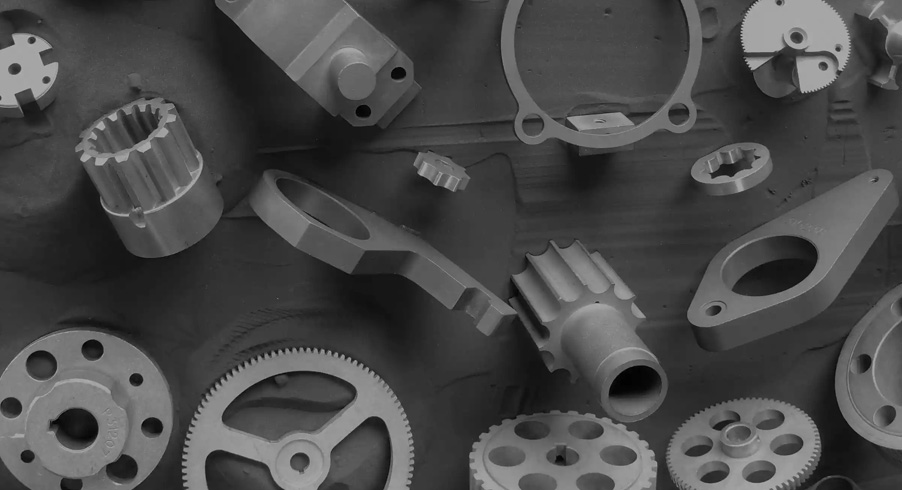
MIM lock components are precision metal parts manufactured using Metal Injection Molding.
Typical components may include:
· Lock cylinder components
· Lock levers
· Lock cams
· Lock pins
· Latch components
· Small brackets
· Actuator components
· Smart lock components
· Access control components
· Padlock components
Many of these parts are relatively small but contain multiple functional features.
For example, a lock component may require holes, slots, curved surfaces, steps, and mating features within a compact geometry.
Producing all these features through CNC machining can require several operations. MIM can potentially form many of these features directly during injection molding.
One of the main advantages of MIM is its ability to produce complex three-dimensional geometries.
This is particularly useful for lock components where the shape is determined by the interaction between several internal and external mechanisms.
Instead of manufacturing a basic blank and machining each feature separately, MIM can integrate multiple features into a single molded component.
Lock manufacturers often require thousands or tens of thousands of identical components.
Once MIM tooling and production parameters have been validated, the process can provide repeatable production for large quantities.
This makes MIM more attractive when the product design is stable and annual demand is significant.
A conventional machined lock component may require:
Turning → Milling → Drilling → Slotting → Deburring → Finishing
MIM can potentially form many of these features during the molding stage.
Reducing the number of secondary operations can lower production time and simplify manufacturing.
Lock mechanisms often depend on the correct relationship between several small components.
Dimensional consistency is therefore important.
MIM production combines precision tooling with controlled molding, debinding, and sintering processes to achieve repeatable component dimensions.
The appropriate material depends on the function of the component.
Common choices may include:
420 stainless steel can be considered when hardness and wear resistance are important.
It can be suitable for components subjected to repeated mechanical contact.
17-4 PH provides a combination of strength, hardness, and corrosion resistance.
It can be considered for mechanically loaded security components.
316L provides excellent corrosion resistance and can be considered for components exposed to humid or corrosive environments.
Low-alloy steels can provide a cost-effective solution where high corrosion resistance is not the primary requirement.
Material selection should always be based on the actual application, load, wear, corrosion environment, and required surface treatment.
The development of electronic and smart locking systems has also created demand for small precision metal components.
Examples include:
· Actuator parts
· Locking mechanisms
· Mechanical interfaces
· Small gears
· Brackets
· Structural components
Although the overall lock may contain electronic components, many mechanical interfaces still require precision metal parts.
MIM can be attractive when these components are small, complex, and produced in significant quantities.
CNC machining remains an excellent choice for prototypes and low-volume production.
However, MIM may become more attractive when:
· Annual volume increases
· The component geometry is complex
· Multiple machining operations are required
· The product design is stable
· Material waste becomes significant
For a new lock design, an OEM may initially use CNC-machined prototypes and later evaluate MIM for mass production.
Before developing MIM tooling, OEM buyers should provide:
· 2D drawing
· 3D model
· Material requirement
· Annual quantity
· Critical tolerances
· Surface finish
· Functional requirements
The MIM supplier can then evaluate:
· Part geometry
· Mold design
· Gate location
· Ejection
· Sintering shrinkage
· Critical dimensions
· Secondary operations
Early design review can reduce tooling modifications and production problems.
MIM is a strong manufacturing option for small, complex lock and security components produced in medium to high volumes.
Its ability to integrate multiple features into compact metal components can reduce machining operations while providing consistent production.
For lock manufacturers looking for an alternative to conventional machining, MIM should be evaluated based on the actual component geometry, annual volume, material requirements, and target cost.
Have a lock component drawing? Send us your 2D or 3D file for a preliminary MIM manufacturing review.
Back to Top