Industry news
By: Jetvision
Aug 19,2026
Powder Metal gears are widely used for applications requiring consistent production, good dimensional repeatability, and cost-effective manufacturing at medium to high volumes.
Unlike machined gears, powder metal gears are produced by compacting metal powder into a die and then sintering the compacted component.
This manufacturing approach can be particularly attractive for relatively simple gear geometries where large production quantities justify dedicated tooling.
What Are Powder Metal Gears?
Powder metal gears are gears produced using conventional powder metallurgy, typically through:
Powder Preparation → Compaction → Sintering → Sizing / Secondary Operations
During compaction, metal powder is pressed inside a precision die.
The resulting compact is then sintered in a controlled furnace atmosphere.
The process bonds the metal particles together and produces the final gear.
What Types of Gears Can Be Produced?
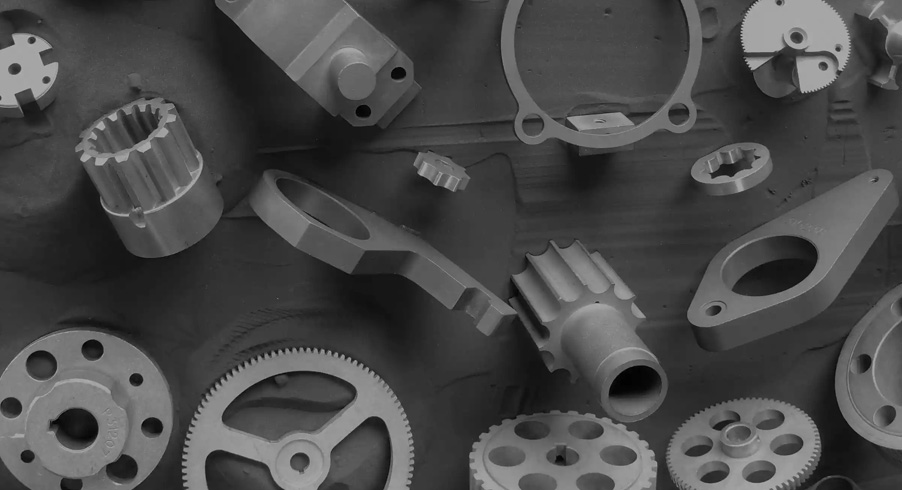
Common powder metal gear designs include:
· Powder Metal Spur Gears
· Powder Metal Helical Gears
· Powder Metal Bevel Gears
· Powder Metal Pinion Gears
· Powder Metal Internal Gears
· Powder Metal Sprockets
· Powder Metal Timing Gears
However, conventional PM has geometry limitations.
Very complex gear designs may be more suitable for MIM or machining.
Why Use Powder Metallurgy for Gears?
High Production Efficiency
Once the tooling is developed, large quantities of gears can be produced efficiently.
This makes PM gears attractive for OEM applications with stable and repetitive demand.
Good Material Utilization
Unlike machining, which removes material from a solid blank, powder metallurgy forms the gear close to its final geometry.
This can reduce material waste.
Cost Advantages
For suitable high-volume applications, PM can reduce manufacturing costs because many gears can be produced with relatively limited secondary machining.
Integrated Features
Depending on the design, features such as: · Hubs · Steps · Holes · Chamfers · Simple profiles
may be incorporated directly into the compacted component.
What Gear Designs Are Best for PM?
Conventional PM is most attractive for relatively straightforward gear geometries.
For example, a simple spur gear with a central bore and integrated hub can be an excellent candidate.
More complex geometries involving difficult undercuts, unusual tooth profiles, or complicated three-dimensional features may require another manufacturing process.
This is an important distinction between conventional PM and MIM.
MIM generally provides greater geometric freedom because the material is injection molded rather than compacted in a conventional pressing die.
Powder Metal Gears vs Machined Gears
Machined gears provide excellent flexibility and can achieve complex geometries and tight requirements.
However, machining can involve: · High cycle time · Material waste · Multiple operations · Higher cost at large volumes
PM gears can be more attractive when the geometry is suitable and production volume is high.
Important Design Considerations
When designing a PM gear, engineers should consider:
Gear Size
PM is particularly suitable for relatively small to medium-sized gears within the capabilities of the pressing equipment.
Tooth Geometry
The tooth profile should be compatible with the pressing direction and die design.
Density Requirements
PM gears contain a controlled level of porosity after sintering.
If the application requires very high density or exceptional mechanical performance, additional processes may be necessary.
Dimensional Tolerance
Critical dimensions should be identified carefully.
Sizing or secondary machining may be used where tighter tolerances are required.
Applications of Powder Metal Gears
PM gears are used in many mechanical systems, including:
· Small motors · Appliances · Automotive mechanisms · Power transmission systems
· Pumps · Actuators · Industrial equipment · Office equipment
The suitability depends on load, speed, noise requirements, wear, dimensional requirements, and operating environment.
When Should You Consider MIM Instead?
If a gear becomes too geometrically complex for conventional pressing, MIM may be worth evaluating.
A useful rule is:
Simple geometry + high volume → PM
Complex small geometry + high volume → MIM
Low volume / prototype → CNC or gear machining
This is not an absolute rule, but it provides a useful starting point for manufacturing discussions.
Powder metal gears can be an economical solution for high volume production of relatively simple gear geometries.
The process offers efficient material utilization, repeatable production, and the ability to integrate selected features into the gear during compaction.
However, conventional PM has geometric limitations.
For complex small gears, MIM may provide greater design freedom, while CNC or gear machining may remain more appropriate for prototypes and low-volume production.
Have a gear drawing? Send us the drawing, material, annual quantity, and load requirements for a PM gear feasibility review.
Back to Top