Industry news
By: Jetvision
Sep 04,2026
Powder metallurgy (PM) and metal injection molding (MIM) are two important manufacturing technologies for producing precision metal components. Both processes use metal powders and sintering, but they are designed for different types of parts and production requirements.
For engineers and purchasing teams, choosing between PM and MIM depends on several factors, including part geometry, size, material, dimensional requirements, production volume, and machining needs.
Understanding the differences between these two processes can help manufacturers select a more efficient and cost effective solution for their metal components.
What Is Powder Metallurgy (PM)?
Powder metallurgy (PM) is a manufacturing process that forms metal powder into a compacted shape and then sinters the compact at a controlled temperature.
A typical PM production process is:
Metal Powder → Mixing → Compaction → Sintering → Secondary Operations → Inspection
PM is particularly suitable for high-volume production of metal components with simple or moderately complex geometries.
Because the material is formed close to the final shape, PM can provide high material utilization and reduce machining requirements compared with conventional manufacturing methods.
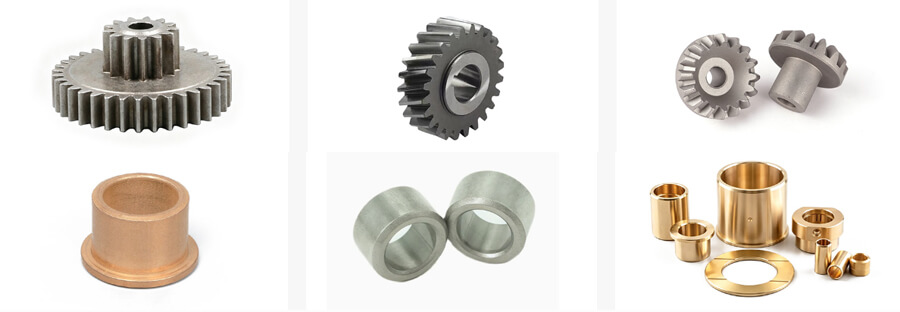
Typical PM Components
Common powder metallurgy components include:
· Automotive parts
· Wear resistant parts
· Magnetic components
· Industrial machine components
· Custom PM parts
PM is widely used when consistent production, material efficiency, and cost control are important.
What Is Metal Injection Molding (MIM)?
Metal Injection Molding (MIM) combines fine metal powder with a polymer binder to produce a moldable feedstock. The feedstock is injected into a mold, followed by debinding and sintering.
The typical MIM process is:
Metal Powder + Binder → Feedstock → Injection Molding → Debinding → Sintering → Inspection
Compared with conventional PM pressing, MIM provides greater design freedom for small and complex components.
It can reproduce features such as thin walls, small holes, grooves, curved surfaces, and intricate three-dimensional geometries that may be difficult or costly to manufacture using traditional pressing and machining.
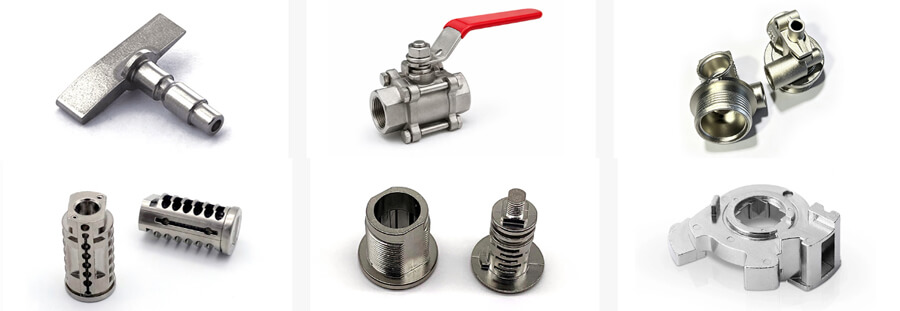
Typical MIM Components
MIM is commonly used for:
· Power tool components
· Robotics components
· Custom MIM components
PM vs MIM: What Is the Difference?
Although PM and MIM share powder based manufacturing principles, their capabilities are different.
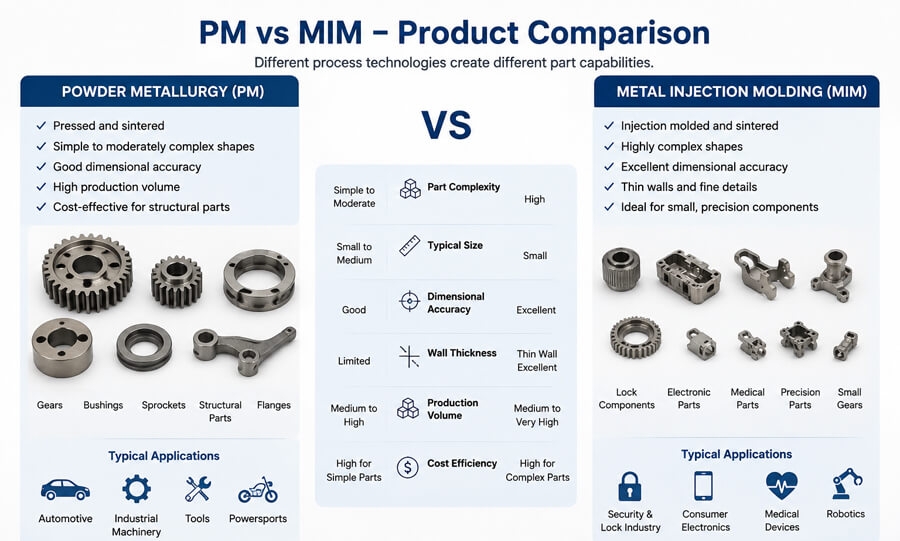
Requirement | Powder Metallurgy (PM) | Metal Injection Molding (MIM) |
Part geometry | Simple to moderately complex | Highly complex |
Part size | Small to medium | Mainly small |
Thin-wall features | Limited | Excellent |
Fine details | Moderate | Excellent |
Complex 3D shapes | Limited by pressing direction | Excellent |
Production volume | Medium to high | Medium to very high |
Tooling | Compaction die | Injection mold |
Secondary machining | May be required | Often minimized |
Typical parts | Gears, bushings, structural parts | Small precision and complex parts |
The right process should therefore be selected according to the actual component rather than simply based on material or production volume.
When Is PM the Better Choice?
PM is generally a good choice for components with relatively simple geometry and high production requirements.
For example, gears, bushings, sprockets, and structural components can often be efficiently produced using conventional powder metallurgy.
PM may be preferred when the component requires:
· High volume production · Cost effective manufacturing · Consistent dimensions · Good wear resistance
· Controlled density · Relatively simple geometry · Efficient material utilization
For these applications, PM can provide an effective balance between component performance and production cost.
When Is MIM the Better Choice?
MIM is particularly suitable for small metal parts with complex geometries and detailed features.
When a component would require multiple machining operations, complicated tooling, or assembly if produced conventionally, MIM can provide a near-net-shape manufacturing solution.
MIM is often considered when a component requires:
· Complex three dimensional geometry · Thin walls · Fine surface details · Small dimensions
· Tight and repeatable tolerances · High production quantities · Reduced machining · Reduced assembly requirements
This makes MIM especially attractive for precision components used in smart locks, consumer electronics, automotive systems, medical devices, power tools, and industrial equipment.
PM and MIM Material Selection
Material selection is another important consideration when choosing between PM and MIM.
Common materials used for PM and MIM components include:
Stainless Steel
Stainless steels such as 304, 316L, and 17-4PH are widely used when corrosion resistance, strength, and durability are required.
Iron Based Materials
Iron and alloy steel powders are commonly used in PM applications because of their cost efficiency and good mechanical properties.
Tool Steels
Tool steel materials can be selected for components requiring high hardness and wear resistance.
Nickel Based Alloys
Nickel based materials are suitable for applications requiring specific corrosion resistance, high-temperature performance, or specialized mechanical properties.
The final material selection should consider the component's operating environment, required mechanical properties, manufacturing process, and production volume.
PM vs MIM: Which Is More Cost Effective?
Neither PM nor MIM is always the lower cost option.
PM generally has an advantage for high volume production of relatively simple components, while MIM can become more economical for small and complex components that would otherwise require extensive machining.
When evaluating the total manufacturing cost, manufacturers should consider:
· Tooling investment · Material utilization · Production volume · Part complexity · Machining requirements
· Assembly requirements · Dimensional requirements · Surface finishing · Overall production cycle
For this reason, the best process should be evaluated during the component design stage rather than after the design has already been finalized.
How to Choose Between PM and MIM?
A simple way to evaluate the two processes is to consider the following questions:
1. Is the component geometry relatively simple?
If yes, PM may be a suitable solution.
2. Does the component have complex 3D features or thin walls?
If yes, MIM may provide greater design flexibility.
3. Is the component small and highly detailed?
MIM is often better suited to these requirements.
4. Does the component require extensive secondary machining?
If conventional PM would require significant machining, MIM may reduce the number of secondary operations.
5. What is the expected production volume?
Both PM and MIM are well suited to volume production, but tooling costs should be evaluated against the expected quantity.
Ultimately, part geometry, material, tolerance, production volume, and target cost should be considered together.
Custom PM and MIM Manufacturing
For OEM and custom projects, the manufacturing process should be selected according to the actual component design and application requirements.
A professional powder metallurgy manufacturer can evaluate the drawing, material, tolerance, geometry, annual production volume, and secondary operations before recommending PM or MIM.
Hunan Jetvision Industrial Co., Ltd. provides custom PM and MIM components for industrial and commercial applications. Our capabilities cover material selection, tooling, powder processing, forming, injection molding, debinding, sintering, secondary operations, and quality inspection.
Whether you need conventional PM parts for high volume production or complex MIM parts for precision applications, the manufacturing process can be tailored to your component requirements.
PM and MIM are complementary powder metallurgy technologies, and neither process is universally better than the other.
PM is generally more suitable for relatively simple, high volume components, while MIM is ideal for small and complex precision metal parts.
By evaluating part geometry, size, material, tolerances, production volume, machining requirements, and overall cost at the design stage, manufacturers can select the most appropriate process for their application.
For new projects, comparing PM and MIM manufacturing before tooling begins can help achieve the right balance of part performance, production efficiency, and cost.
Back to Top