Industry news
By: Jetvision
Sep 17,2026
When manufacturers need to produce large quantities of metal components with consistent quality, powder metallurgy (PM) can provide an efficient alternative to conventional machining, casting, and other metalworking processes.
Powder metallurgy is particularly suitable for high volume metal parts because it combines near-net-shape manufacturing, efficient material utilization, repeatable production, and reduced machining requirements. These advantages make PM an attractive solution for components used in automotive systems, industrial equipment, power tools, appliances, gears, bearings, and other mass produced products.
What Is Powder Metallurgy?
Powder metallurgy is a manufacturing process that produces metal components from specially prepared metal powders. The basic production sequence generally includes powder preparation, mixing, compacting, sintering, sizing, and inspection.
During compaction, metal powder is pressed into a mold to form the required component geometry. The compacted part is then heated in a controlled atmosphere during sintering, allowing the particles to bond and develop the required mechanical properties.
Depending on the component design and performance requirements, additional processes such as machining, heat treatment, surface treatment, or impregnation can also be applied.
Why Powder Metallurgy Works Well for High Volume Production?
1. Efficient Material Utilization
One of the main advantages of powder metallurgy is its efficient use of raw material.
Unlike machining processes that remove a significant amount of material from a larger billet or bar, PM forms components directly from metal powder. This can significantly reduce material waste, particularly when producing thousands or millions of relatively small components.
For manufacturers producing high volume metal parts, better material utilization can have a direct impact on overall production costs.
2. Consistent Part to Part Quality
High volume manufacturing requires stable dimensions and repeatable performance across large production batches.
Powder metallurgy uses dedicated tooling and controlled pressing and sintering conditions to produce large quantities of components with consistent geometry. Once the production process has been properly established, the same tooling can be used repeatedly to manufacture parts with highly consistent dimensions.
This makes powder metallurgy parts suitable for applications where dimensional repeatability is important.
3. Reduced Machining Requirements
Many PM components are manufactured close to their final shape. This is commonly referred to as near-net-shape manufacturing.
Because less material needs to be removed after sintering, PM can reduce secondary machining compared with processes that require extensive material removal.
For high volume production, reducing machining operations can help shorten manufacturing cycles, lower tooling and labor requirements, and improve production efficiency.
4. Competitive Cost at High Production Volumes
Powder metallurgy requires dedicated tooling, so tooling costs need to be considered during the initial production stage.
However, when the required production quantity is high, the tooling cost can be distributed across a large number of parts. As production volume increases, the cost per component can therefore become increasingly competitive.
This is one reason why PM is commonly considered for high volume metal parts rather than very small production runs.
5. Complex Geometries Can Be Produced Efficiently
Powder metallurgy is not limited to simple blocks or cylindrical components. Properly designed tooling can produce a wide range of shapes, including components with:
· Internal and external profiles
· Holes and slots
· Steps and shoulders
· Teeth and gear profiles
· Flanges and bosses
· Complex cross-sections
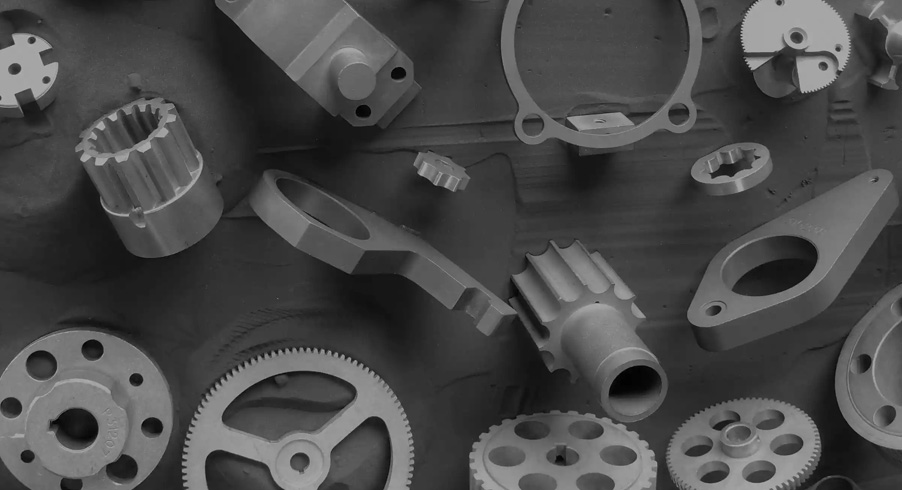
This capability is particularly useful for PM gears, bearings, structural components, bushings, and custom powder metallurgy parts.
Powder Metallurgy for Gears and Structural Components
Gears are one of the well-known applications of powder metallurgy.
PM gear manufacturing can produce large quantities of small and medium-sized gears with consistent dimensions and controlled production costs. The process can also reduce the amount of material removed compared with machining gears from solid stock.
In addition to gears, powder metallurgy is widely considered for bushings, bearings, sprockets, pulleys, structural parts, and other components that require repeatable production in large quantities.
Materials Used for Powder Metallurgy Parts
A wide range of metal powders can be used in powder metallurgy, depending on the required mechanical properties, dimensional requirements, wear resistance, corrosion resistance, and application.
Common material options include:
· Iron and iron based alloys · Carbon steel · Alloy steel · Stainless steel · Copper based alloys
· Nickel based materials · Other customized metal powder formulations
Material selection should be based on the actual operating environment and required performance rather than production volume alone.
Powder Metallurgy VS Conventional Machining
For high volume production, the most appropriate manufacturing process depends on component geometry, material, tolerance, annual quantity, and performance requirements.
Powder metallurgy can offer advantages when a component can be effectively designed for pressing and sintering and when production quantities are sufficiently high to justify dedicated tooling.
Conventional machining, meanwhile, can remain more suitable for very low-volume production, extremely tight tolerances, or geometries that are difficult to produce through compaction.
Therefore, the goal is not simply to replace machining with PM, but to select the manufacturing process that provides the appropriate combination of cost, quality, production volume, and component performance.
When Should You Consider Powder Metallurgy?
Powder metallurgy is particularly worth considering when your project involves:
· High annual production volumes
· Repetitive component geometries
· Small or medium-sized metal parts
· Near-net-shape requirements
· Reduced material waste
· Consistent part-to-part dimensions
· Reduced secondary machining
· Cost-sensitive mass production
For components with complex geometries or demanding mechanical requirements, other powder-based technologies such as Metal Injection Molding (MIM) may also be considered.
Designing Parts for High Volume PM Production
Successful powder metallurgy production begins with proper component design.
Features such as wall thickness, pressing direction, holes, steps, density requirements, tolerances, and sintering behavior should be considered during the design stage. A component that is suitable for conventional machining may require design adjustments to achieve efficient PM production.
Working with an experienced powder metallurgy manufacturer during the early design stage can help identify opportunities to simplify the component structure, optimize tooling, and reduce secondary operations.
Powder metallurgy is well suited to high volume metal parts because it combines efficient material utilization, repeatable production, near-net-shape manufacturing, and reduced machining requirements.
For manufacturers producing large quantities of gears, bushings, bearings, structural components, and other precision metal parts, PM can provide a practical manufacturing route when the component design and production volume are appropriate.
At Jetvision, we provide customized powder metallurgy parts and PM components based on customer drawings, material requirements, dimensional specifications, and production quantities. Our manufacturing process can be tailored for different industrial applications and high-volume production requirements.
Back to Top