Industry news
By: Jetvision
Aug 19,2026
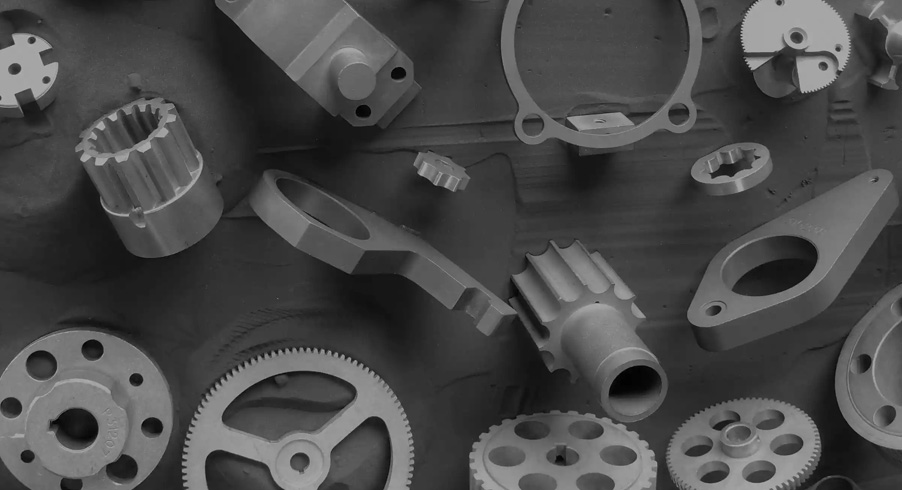
Metal Injection Molding (MIM) is not suitable for every metal component. Its greatest advantages appear when a part combines small size, complex geometry, high production volume, and the need for consistent dimensional performance.
For OEM engineers and purchasing teams, the key question is often:
"Can my part be made economically with MIM?"
This guide explains the characteristics that make a component a strong MIM candidate and highlights common applications across several industries.
What Makes a Part Suitable for MIM?
A good MIM candidate typically has several of the following characteristics:
· Small or compact dimensions
· Complex three-dimensional geometry
· Thin walls or intricate features
· High production volume
· Multiple machining operations
· Difficult-to-machine geometry
· Tight requirements for repeatability
· A suitable MIM material
The more of these characteristics a component has, the more attractive MIM may become.
1. MIM Lock and Security Components
Lock and security hardware is one of the strongest application areas for MIM.
Small lock components often contain complex combinations of:
· Holes · Slots · Curved surfaces · Steps · Levers · Functional interfaces
These features can be difficult or expensive to manufacture using conventional machining.
Typical applications include:
· Lock cylinder components · Padlock components · Smart lock components
· Access control components · Key system components · Security hardware
MIM can potentially integrate multiple features into a compact component while maintaining consistent production quality.
2. MIM Mechanical Components
MIM is also suitable for many small mechanical components.
Examples include:
· Levers · Cams · Brackets · Housings · Shafts · Small structural components · Actuator parts
The key consideration is whether the geometry and production volume justify the initial tooling investment.
3. MIM Gears and Transmission Components
Small gears can be suitable for MIM when they require complex geometry and high production quantities.
Potential applications include:
· Spur gears · Planetary gear components · Small transmission gears · Gearbox components · Drive system components
MIM can produce detailed gear geometries with consistent repeatability.
However, gear design should consider tooth geometry, dimensional requirements, material properties, load conditions, and any required finishing operations.
4. MIM Hardware and Tool Components
MIM is well suited to small hardware components where complex geometry and high production volume are important.
Examples include:
· Fastening components · Tool holders · Hand tool components · Power tool components · Cutting tool components · Architectural hardware
For these applications, wear resistance, strength, hardness, and surface treatment may be important material considerations.
5. MIM Consumer Electronics Components
The consumer electronics industry often requires small components with complex geometry and high dimensional consistency.
Potential MIM applications include:
· Watch components · Mobile device components · Wearable device parts · Camera components · Appliance components · Small structural hardware
MIM can be attractive when the component is too complex for simple forming but too costly to machine at high volume.
6. MIM Components for Industrial Equipment
Industrial equipment also uses many small precision components.
Examples include:
· Actuator components · Valve components · Sensor housings · Mechanical linkages · Structural components · Precision hardware
Material selection should be based on the operating environment and required mechanical performance.
7. When MIM May Not Be the Best Choice
Not every small component should be manufactured using MIM.
MIM may be less attractive when:
· Annual volume is very low
· The component is very large
· The geometry is extremely simple
· The design changes frequently
· Conventional machining is already highly economical
· The required material is not suitable for MIM
For simple high-volume parts, conventional PM may be more appropriate.
For prototypes and low-volume components, CNC machining may be more practical.
The right manufacturing process should therefore be selected based on the complete application.
How to Evaluate Your Part for MIM
Before requesting a quotation, consider these questions:
1. How many parts do you need annually?
Higher volumes generally make the economics of MIM more attractive.
2. How complex is the geometry?
If the component requires multiple machining operations, MIM may offer greater value.
3. What is the part weight?
Small and lightweight components are often well suited to MIM.
4. What material is required?
Confirm that the required alloy can be processed effectively using MIM.
5. What tolerances are critical?
Identify functional dimensions rather than applying unnecessarily tight tolerances to the entire component.
6. Are secondary operations required?
The fewer post-sintering machining operations required, the greater the potential cost advantage.
A Simple MIM Candidate Checklist
A component is worth evaluating for MIM if most of the following answers are "yes":
· Is the part relatively small?
· Is the geometry complex?
· Is annual production volume medium or high?
· Are several machining operations currently required?
· Is the component design stable?
· Is a suitable MIM material available?
· Is consistent production quality important?
If the answer is yes to most of these questions, MIM may be a strong candidate.
MIM is particularly valuable for small, complex metal components produced in medium to high volumes.
Its applications range from lock and security components to mechanical parts, gears, hardware, tools, consumer electronics, and industrial equipment.
However, the best manufacturing process depends on the complete combination of geometry, production volume, material, tolerance, part size, and target cost.
The best way to determine whether your component is suitable for MIM is to evaluate the actual drawing rather than relying on general rules.
Have a complex metal component you are currently machining or casting? Send us the drawing and annual quantity. We can review whether MIM could provide a more efficient production solution.
Back to Top